
Recipe project · Los Angeles
About Dave's Hots Chickens
A recipe project, not a restaurant. The gap between home fried chicken and restaurant fried chicken is smaller than most people think — and it is mostly about technique and temperature, not secret ingredients.
What this project is
Dave's Hots Chickens is a digital collection of fried chicken recipes and the reasoning behind them, sold as a download and written for home kitchens in the United States. Four formats carry the whole collection: strips, wings, nuggets, and breaded cutlets. Everything is built around methods that work on a stovetop with ordinary equipment, and that constraint shapes every decision that follows.
When a step has a range, the range comes from cooking both ends. When a technique needs a piece of equipment most home kitchens do not own, it gets rewritten or left out. The result reads like a kitchen notebook rather than a glossy cookbook: short method notes, the reasoning behind each one, and the failure modes written down plainly.
Why fried chicken, and why restaurant-style
Fried chicken is one of the few dishes where the home version and the restaurant version differ for structural reasons, not because of a secret recipe. Restaurants control oil temperature, brine consistently, and fry in batches sized to the pot. Home cooks guess — and the guessing is what shows up on the plate.
A restaurant holds the oil within a narrow band for the whole service. A home cook watches a dial and hopes. The collection teaches the flake-and-read test, why a first fry at a lower temperature sets the crust, and how the oil drops when cold chicken goes in — the single most common reason a batch comes out greasy.
Chains brine in measured batches on a schedule. Home brining is usually a guess poured into a bowl. The recipes give brine strength, resting time, and what happens if the chicken sits an hour too long — plus the difference between a wet brine for wings and a dry one for cutlets.
A restaurant fryer holds a basket sized for its oil. A home pot does not. Crowding drops the oil temperature, steams the crust, and leaves the coating pale. The collection explains how much chicken one pot actually handles, and how to hold finished pieces warm without softening the crust.
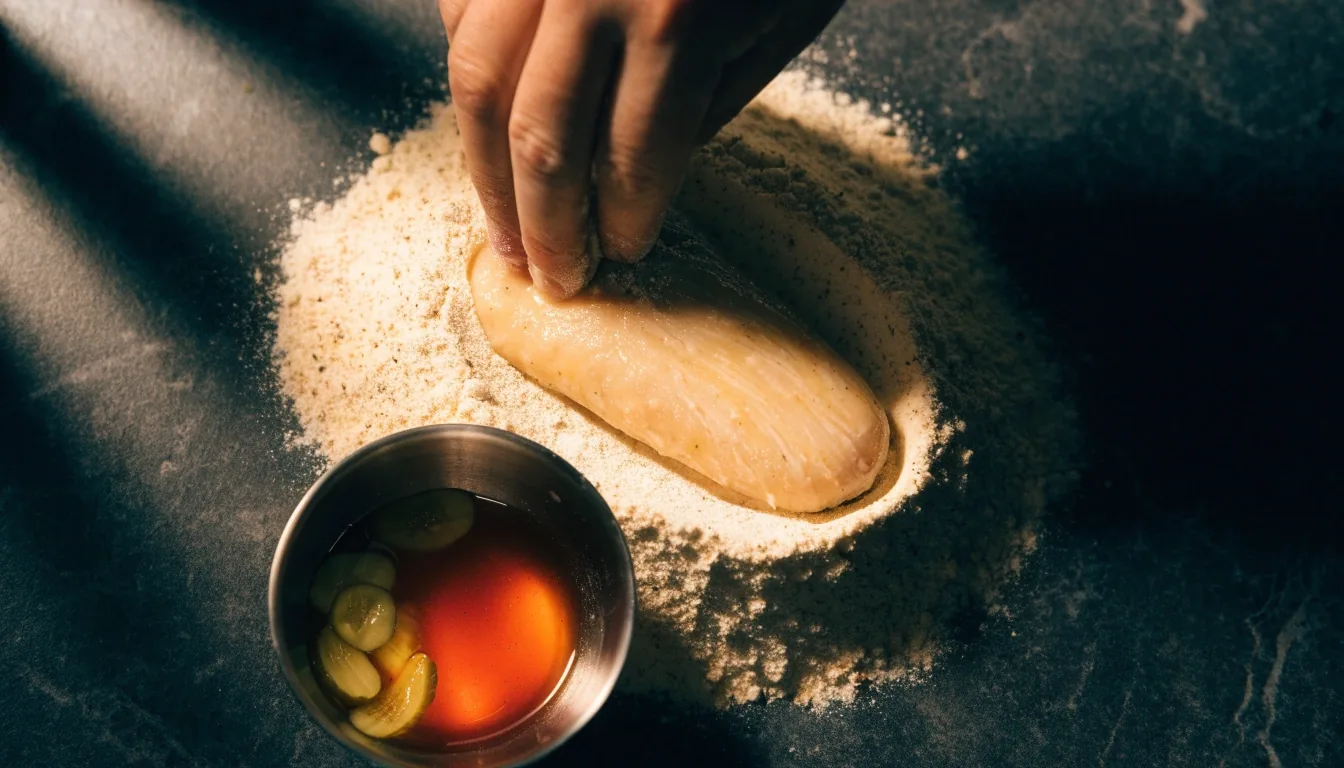
A restaurant's dredge is consistent because someone does it all day. Home cooks get patches where the crust slips off. The recipes cover rest time after dredging, why buttermilk and flour need a second pass, and how to press the coating so it stays put through the fry.
The project started as a set of notes about closing that gap. It turned into a full collection once the notes kept growing — first the strips, then the wings, then the nuggets and cutlets that round it out.
How the recipes are developed
Each recipe gets cooked repeatedly before it's written up, and the variations are tested against each other rather than in isolation. A cook note is only useful if it tells you what to change when the result is wrong.
The troubleshooting blocks are written from the failures, not the successes, because that's the part people actually need. If a technique only works with equipment most home kitchens don't have, it doesn't go in. Recipes get revised when a step turns out to be unclear or a range turns out to be too wide — feedback from people cooking them is the main input.
Testing that stays on the stovetop
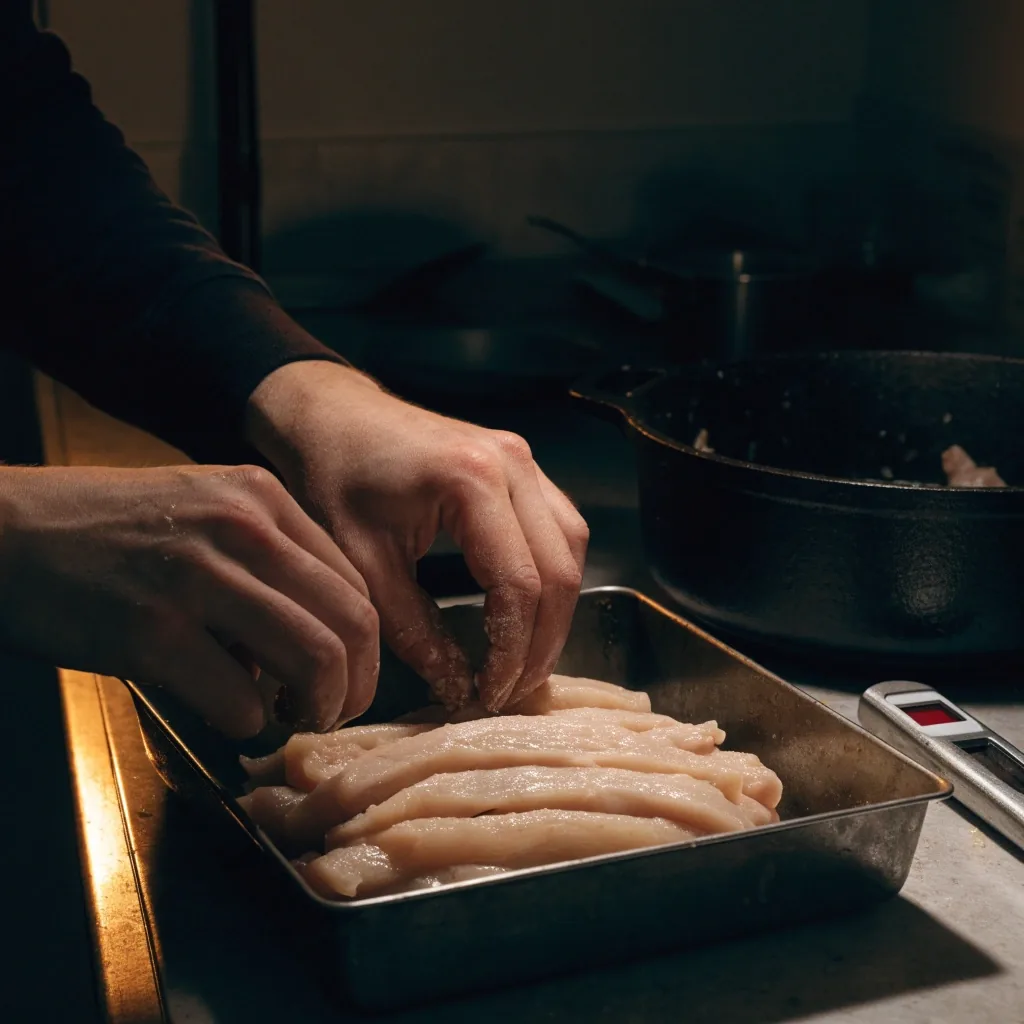
Every method is worked through on a normal range with a heavy pot and a simple thermometer. No pressure fryer, no restaurant rig, no specialty appliance that would change the answer for most kitchens.
When two methods tie, the simpler one goes in and the other becomes a note explaining why it lost.
The chain influence
American fried chicken owes a lot to its chains, and the collection is honest about that. The techniques that made regional fried chicken distinct were developed and repeated at scale long before most home cooks had a thermometer in the oil.
Bojangles
Charlotte, from 1977
Tied Cajun seasoning and biscuits together in the Southern imagination, and made spicy fried chicken a house habit rather than a novelty order.
Church's Texas Chicken
San Antonio, from 1952
Has been selling bone-in fried chicken since 1952, and its long run shaped what a crisp, peppery crust is expected to taste like.
Lee's Famous Recipe Chicken
Lima, Ohio, from 1966
Kept pressure-fried homestyle cooking alive in its region, and kept a regional take on breading in circulation for decades.
The collection studies the techniques, not the trademarks. No recipe here claims to reproduce a specific chain's food — the point is to understand what those kitchens do that home cooks can do too.
What gets left out
Knowing what a collection refuses to include tells you as much as the recipe list does. Four things stay out on purpose.
-
Left out
Pressure-frying, because home pressure fryers are a different equipment category and the instructions would not transfer to a normal pot.
-
Left out
Air-fryer conversions presented as equivalent, because the texture genuinely differs and pretending otherwise would set you up to be disappointed.
-
Left out
Restaurant-scale quantities, because a home pot can't hold them without dropping the oil temperature and steaming the crust.
-
Left out
Any claim that a recipe reproduces a specific chain's food. The goal is fried chicken that's crisp, seasoned, and juicy on your stove.
Keeping the collection useful
Recipes get revised when a step turns out to be unclear or a range turns out to be too wide. Feedback from people cooking the recipes is the main input, which is why the contact page exists and why questions about specific steps get answered. If a technique works better a different way in a normal kitchen, it gets updated.
What feedback changes
- Wording that left the timing ambiguous
- A temperature range that turned out to be too wide
- A step that assumed equipment a home kitchen may not have
- A substitute that produced a noticeably better result
Who it's for
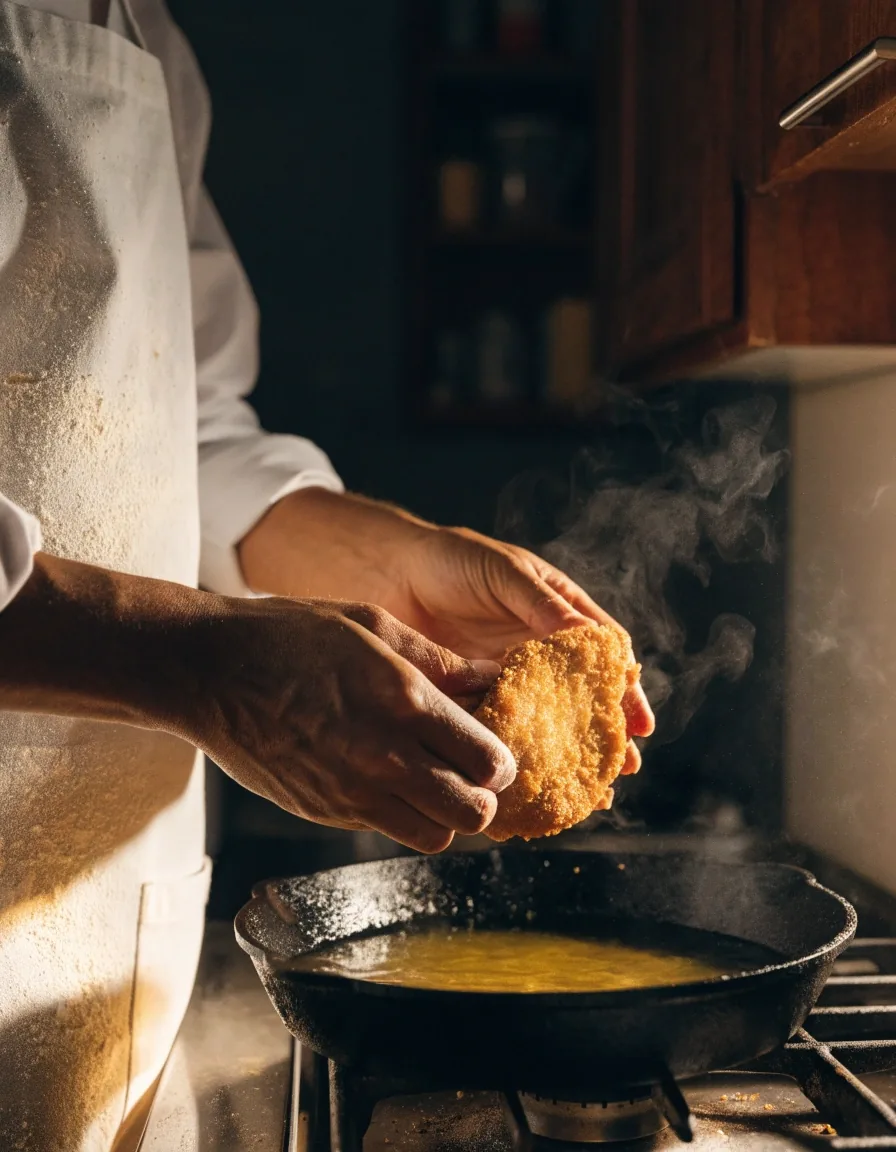
Home cooks who've made fried chicken before and been disappointed. People who want wings that survive sauce, or nuggets their kids will actually eat, or a cutlet that doesn't turn out dry. It's also for anyone who's curious why the restaurant version tastes different, and wants the actual answer rather than a shortcut.
You don't need a restaurant kitchen. You need a heavy pot, a thermometer, and the willingness to cook a batch twice while you get the temperature right. The recipes assume you've fried before, so they skip the very beginning and spend their space on the parts that usually go wrong.
What you won't find here
No claims about health benefits, no promises about weight or diet, and no invented reviews. Fried chicken is fried chicken. What the collection offers is technique, tested recipes, and clear explanations of what goes wrong and why.
If a recipe needs a caveat, it gets a caveat rather than a promise. If a method only works under certain conditions, those conditions are stated up front. That is the whole editorial standard: say what the recipe does, say where it can fail, and leave the rest to the cook.
Straight answers on
- Why a batch came out greasy
- Why the crust slid off in the oil
- Why the inside was still pink
- Why the second batch tasted flat
Questions cooks ask before buying
How is the collection delivered?
As a digital download, so there's nothing to wait for in the mail. You get the recipe set and the method notes, and you can start cooking the same day you order.
Do the recipes work without a deep fryer?
They're written for a heavy pot on a stovetop, which is the setup most home kitchens already have. A deep fryer works too, but nothing in the collection depends on one.
Is this a Dave hot chicken recipe in the Nashville style?
The collection covers heat levels and cayenne-forward seasoning as a technique, so you can dial a batch as hot as you want it. What it doesn't do is copy a specific restaurant's version and pass it off as the original.
Can I get help if a step doesn't work?
Yes. Questions about specific steps go to the contact page and get answered, and the answer often ends up improving the recipe note itself. Reach the project at [email protected], or by phone at +1-323-555-0198 during weekday hours.
Does the collection cover wings, nuggets and cutlets as well as strips?
All four formats are in, each with its own brine, coating and fry notes. Wings get a coating that holds sauce, nuggets are shaped and breaded for a shorter fry, and cutlets are handled so the middle stays tender while the crust sets.
Where to go next
Start with the collection if you want the recipes, or read the techniques guide first if you'd rather understand the method before you buy. Either path leads to the same pot of oil.
The project
- Studio
- 4820 W Sunset Blvd, Los Angeles, CA 90027, USA
- Phone
- +1-323-555-0198
- [email protected]
- Hours
- Monday to Friday, 9:00 AM – 6:00 PM
Cook the batch, then tell us what happened
Dave's Hots Chickens exists because the notes kept growing and other cooks kept asking for them. If you cook from the collection and something reads wrong, or a step needs clearer wording, that feedback is the thing that keeps the project honest. Reach out through the contact page, and start with the free sample recipe if you'd rather try a single batch first.