Dave's Hots Chickens Dave's Hots Chickens
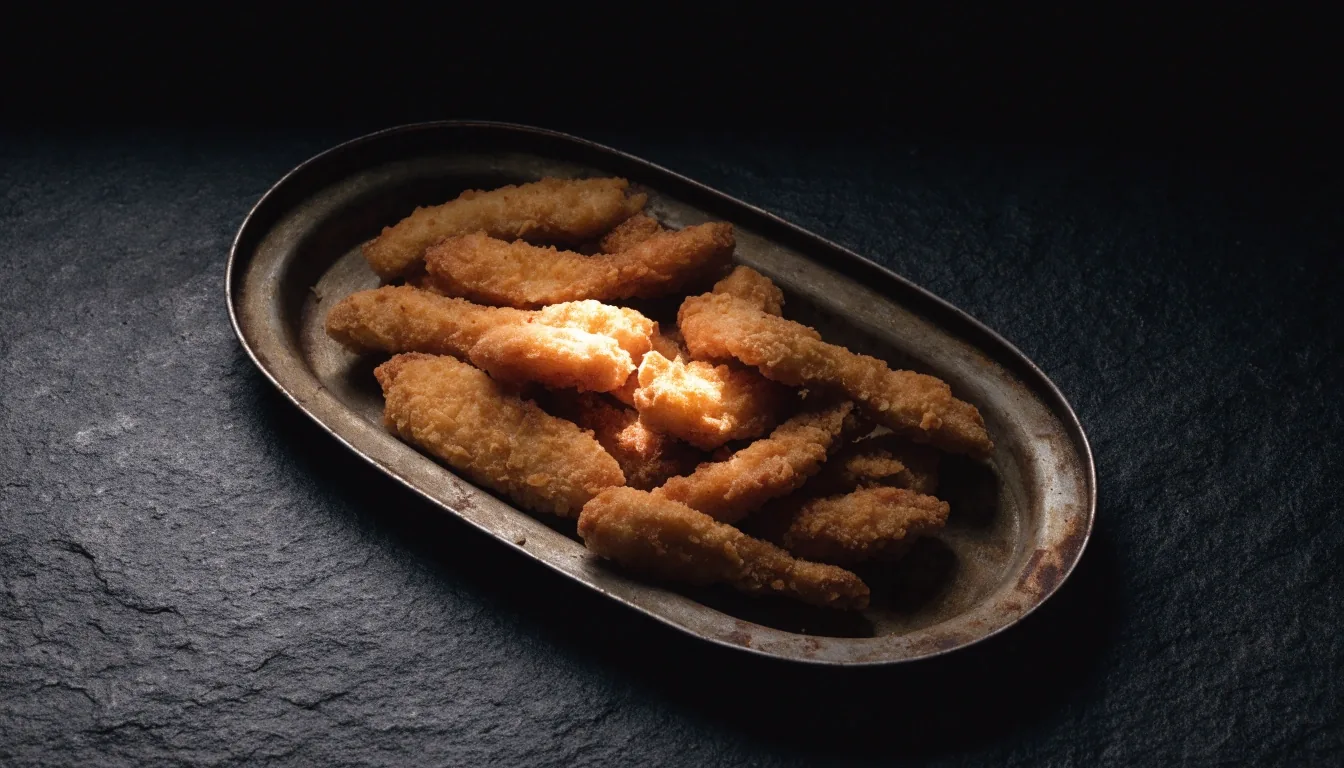
A shallow tray of freshly fried chicken tenders and strips resting on dark stone under a single warm light

The recipe collection

Inside the fried chicken recipe collection

This page is the honest inventory: what is in the collection, how it is organized, and what each recipe is actually for. Read it, compare it against what you already cook, and decide whether it fills a gap in your kitchen.

How the collection is organized

Four recipe families, each with a core method and variations: strips and tenders, wings (bone-in and boneless), nuggets, and breaded cutlets. Every recipe follows the same structure, so you always know where to look.

Target result
What the finished piece should look and sound like — crust colour, crunch, and how the meat should read when you cut it.
Ingredients in order
Listed in the sequence you actually use them, so you can set up the brine, the dredge, and the oil before anything hits the pan.
Numbered steps
Short steps with the temperatures and times written where you need them, not buried in a paragraph above.
Troubleshooting
What to do when the coating slides off, the oil drops too far, or the pieces come out pale — the fixes most recipes skip.
Scaling notes
What changes when you double the batch — brine stays put, fry batches do not, and the reason is in the pot, not the recipe.

You can cook straight through from the first family to the last, or jump to the format you need tonight. Nothing is gated behind another recipe.

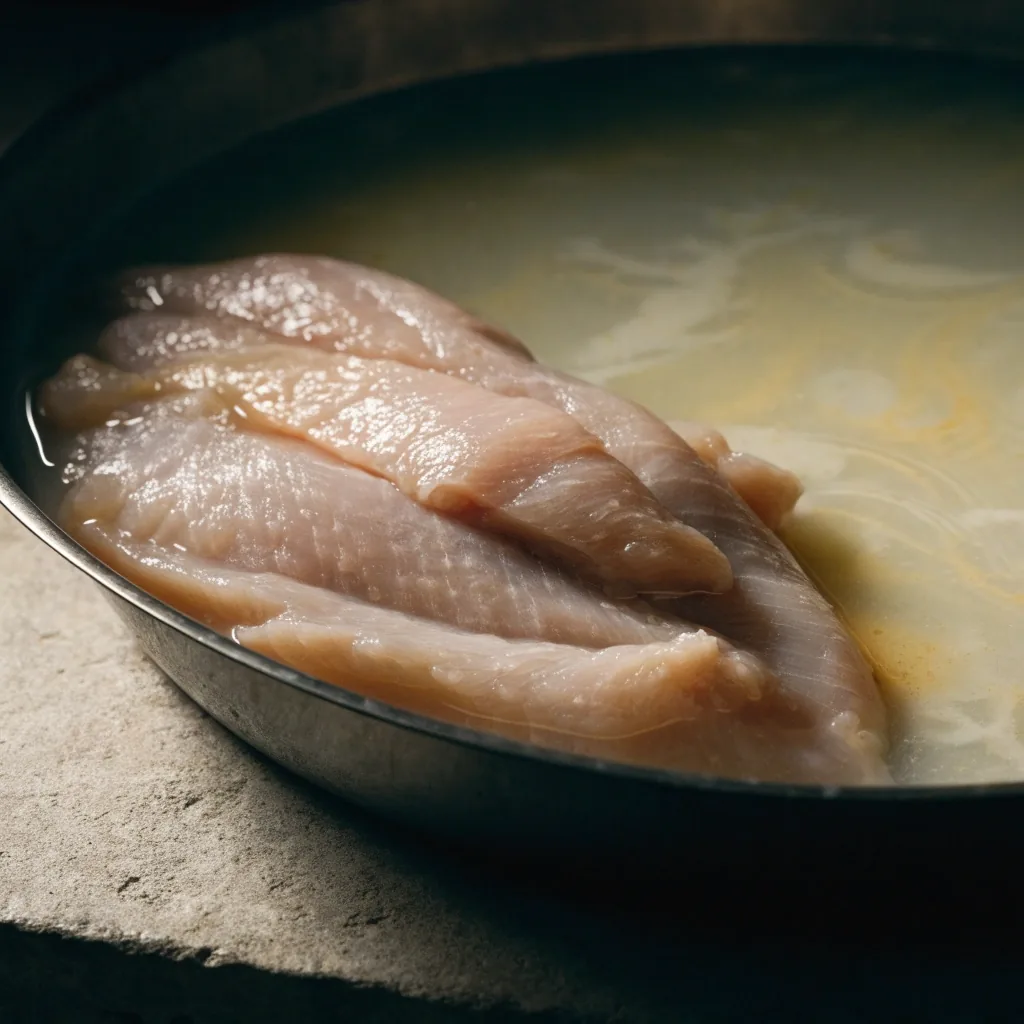
Raw chicken strips resting in a shallow tray of buttermilk brine on a dark counter under warm light

Base method

The brine that does the heavy lifting

Buttermilk brine is the backbone of most of these recipes. The buttermilk's acidity tenderizes the surface of the meat while the salt seasons it through, which is why the chicken tastes seasoned rather than just coated.

The collection gives you a base ratio and four variations: classic, cayenne-forward, garlic-herb, and a pickle-brine version that leans on the brine from a jar of pickles. Each one lists a minimum and a maximum soak time, because longer is not always better — past the maximum, the surface texture starts to change and the meat reads softer than it should.

What each format is for

Four families, one coating philosophy. The differences are thickness, timing, and how much oil you want to deal with on a weeknight.

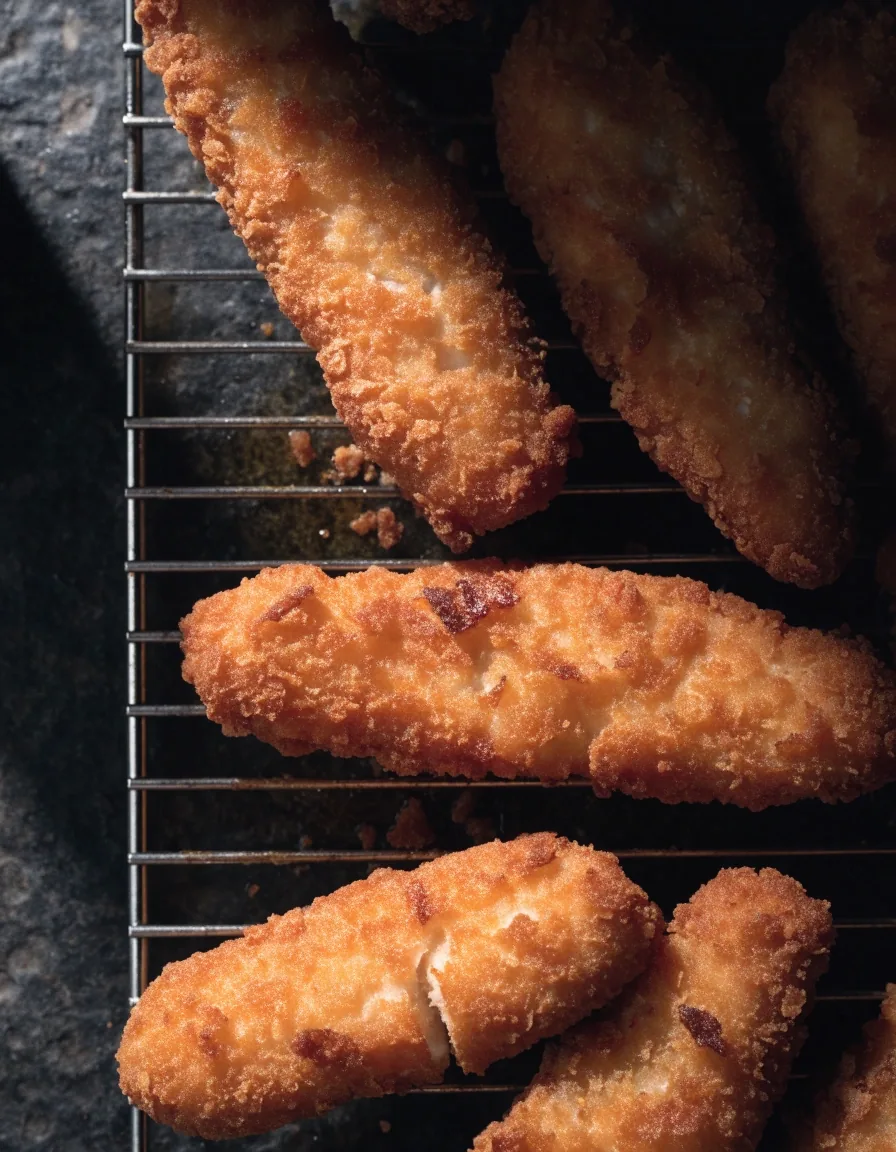
Freshly fried breaded chicken tenders and strips draining on a wire rack over dark stone

Crispy chicken strips and tenders

Strips are where most people start, and where most people learn their first lesson about oil temperature. The recipe uses a two-stage dredge: seasoned flour, then buttermilk, then back into the flour with a press so the coating sticks.

Tenderloins cook in a few minutes. Breast strips need even pounding first, and the recipe explains how thick to aim for. Dipping sauces are included, though the chicken stands on its own.

Two-stage dredge · tenderloin or pounded breast · dip recipes included

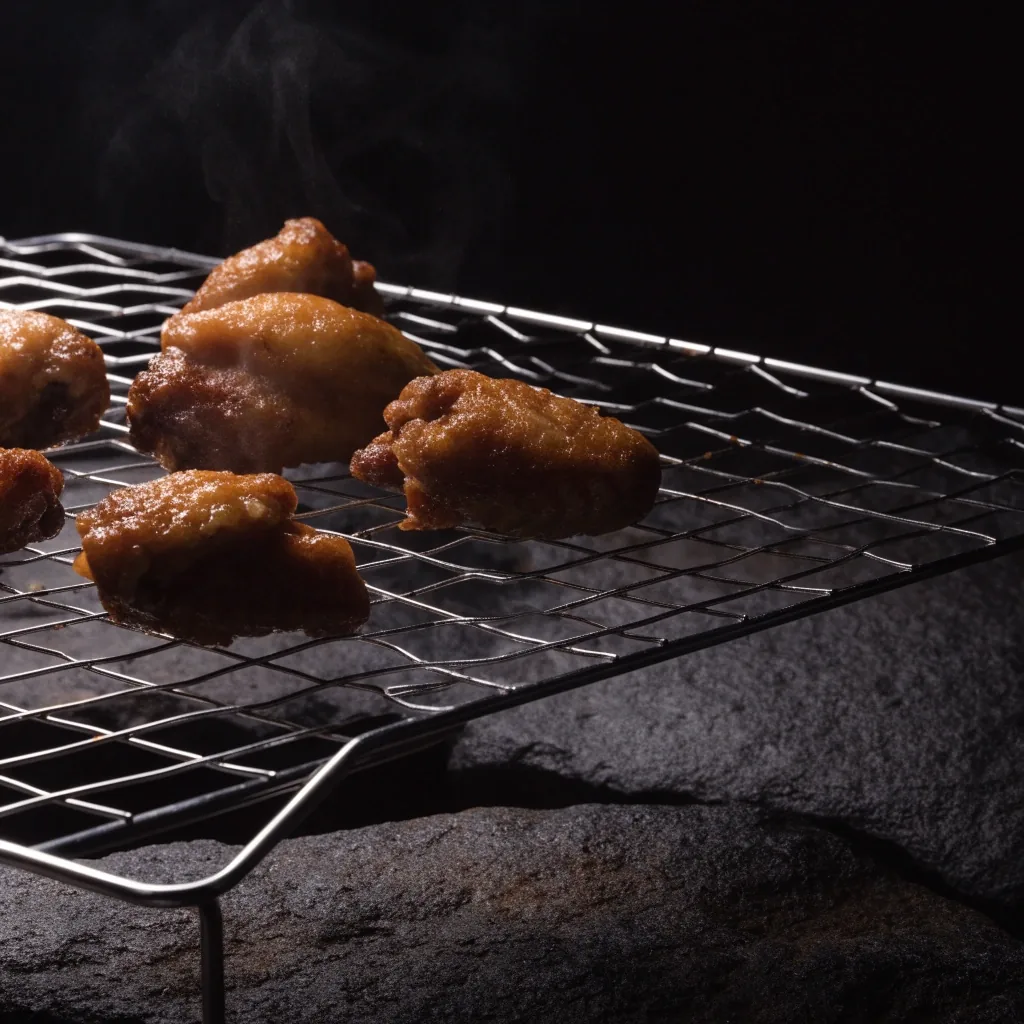
Double-fried chicken wings draining on a wire rack over a dark counter

Wings, and why double-frying works

Wings get a first fry at a lower temperature to cook the meat through, then a rest, then a second fry at higher heat to drive off moisture and firm the crust. That second pass is why restaurant wings stay crisp under sauce.

The collection covers both bone-in and boneless wings, plus a baked-then-fried option for smaller kitchens. Sauce timing gets its own section, because it is the step people rush.

Bone-in and boneless · baked-then-fried variation · sauce timing

Nuggets that do not steam themselves

Nuggets go wrong when they are too thick, too wet, or crowded. The recipe has you chill the shaped pieces before breading, which helps the coating set, and fry in small batches with space between them.

Seasoning goes into both the meat mixture and the breading, so the flavor is not only on the outside. There is a baked variation for anyone who would rather not deal with a pot of oil on a weeknight.

Chill before breading · seasoned inside and out · baked variation

Breaded cutlets, thin and fast

Cutlets are pounded thin, dredged in seasoned flour, egg, and breadcrumbs, then shallow-fried in a skillet. They cook in about two minutes a side, which makes them the fastest thing in the collection.

The recipe covers both fine breadcrumbs and panko, and explains how the choice changes the texture. This is also the format that holds up best under a sauce or on a sandwich the next day.

Pounded thin · skillet shallow-fry · breadcrumb vs. panko

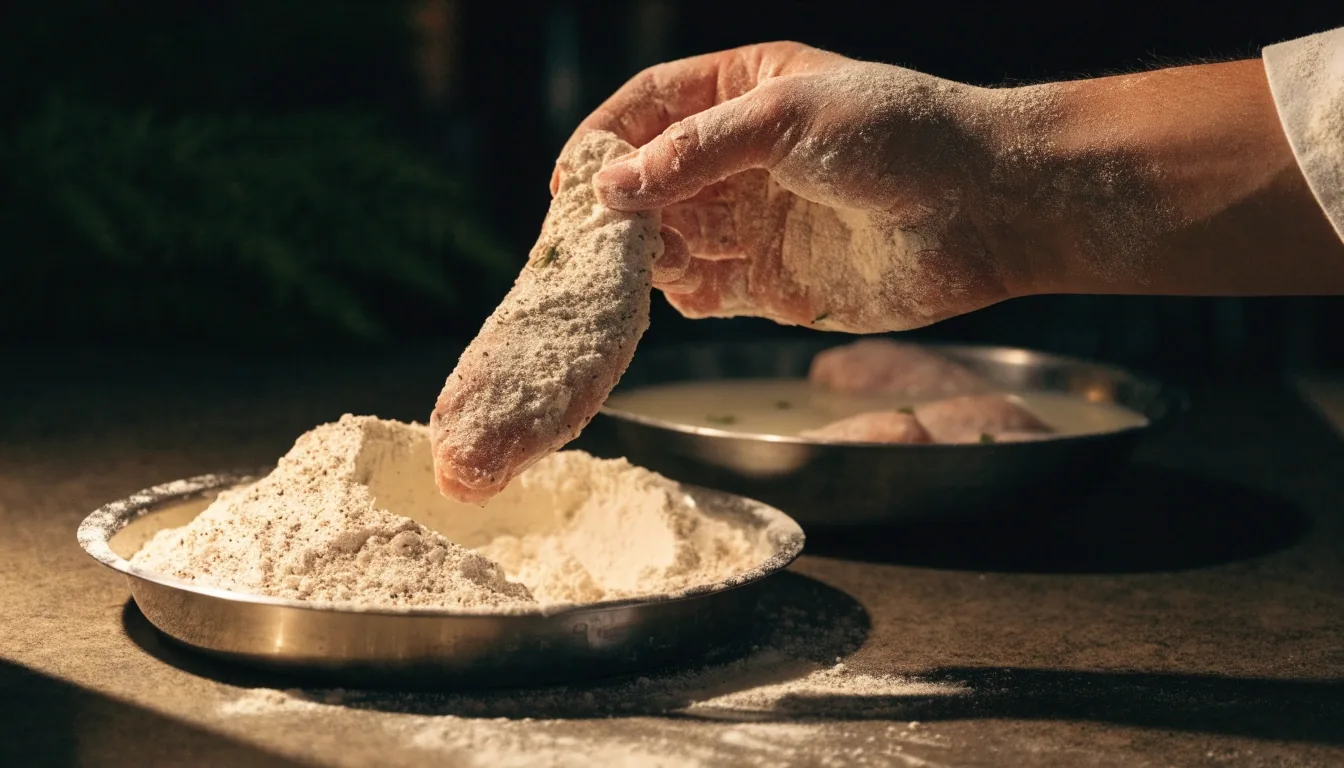
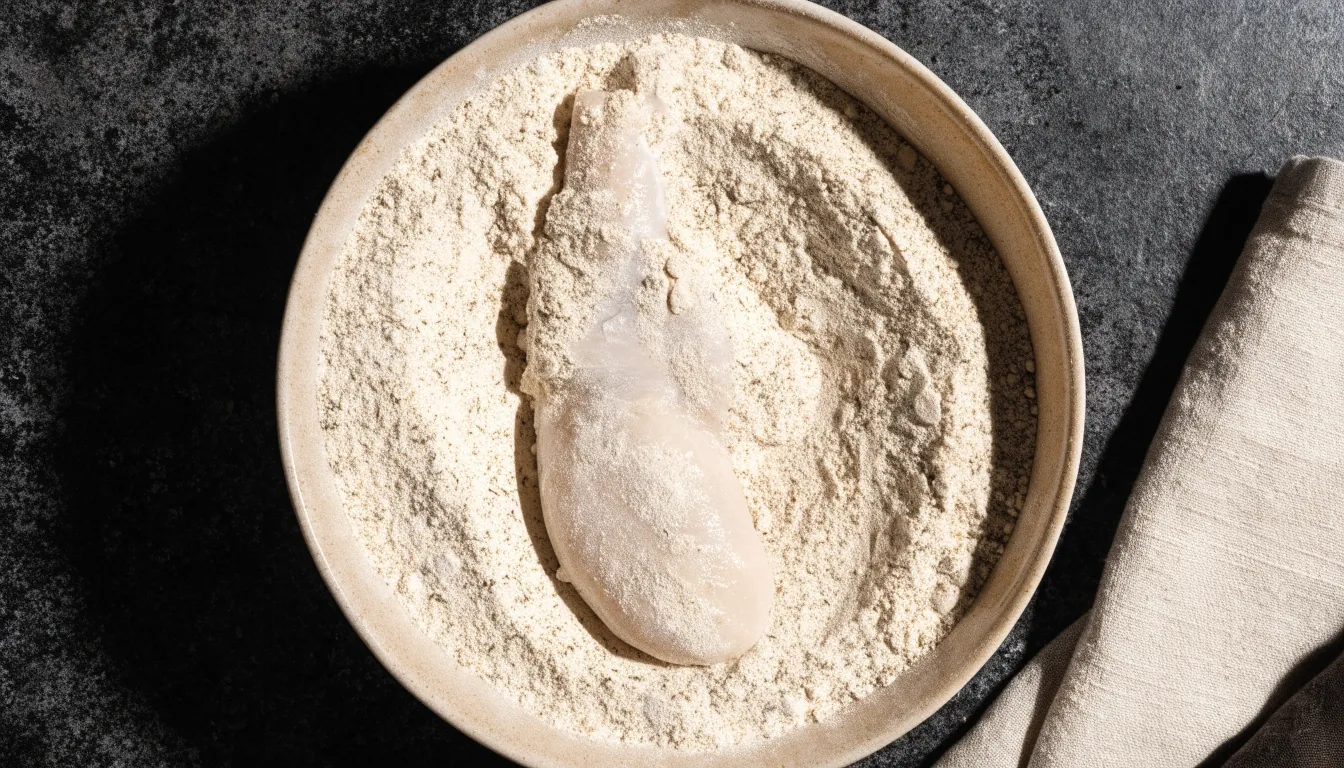
Seasoned flour drifting in mid-air above a shallow dredging tray on dark stone
Seasoned flour and the crisp-coating question
A cast-iron skillet on dark stone holding a shallow pool of cayenne frying oil under warm light
Sauces, dips, and finishing oils

Seasoned flour and the crisp-coating question

Flour alone gives you a coating that bends. The collection's seasoned flour blends all-purpose flour with a portion of cornstarch, which fries harder and stays crisp longer. The ratio matters more than the brand, and it is written in tablespoons and grams so you can weigh it or scoop it.

From there, the recipes branch into Cajun-style seasoning, a straight salt-pepper-garlic base, and a hotter blend for anyone building toward Nashville-style. If you are chasing Dave hot chicken flavor, the cayenne-forward flour and the finishing oil are the two places that work does the most for you.

Finishing oils get temperature instructions, since pouring cold oil over hot chicken just makes it greasy. Dips are written to hold in the fridge for a few days, which matters if you are cooking for a household rather than a single meal.

Scaling for a crowd

Every recipe includes a multiplier table for doubling and tripling, with notes on what changes. Brine time stays the same. Fry batches get smaller relative to the total, because a bigger pot does not mean you can crowd it — crowding drops the oil temperature and steams the crust.

Holding instructions cover how to keep finished pieces warm and crisp in a low oven without steaming them into softness, including how long the window stays open before the coating starts to soften.

What changes as you scale

  • Brine time Unchanged. Doubling the meat does not double the soak.
  • Fry batches Smaller relative to the total, so the oil recovers between drops.
  • Seasoned flour Scaled by weight, with a volume fallback if you are scooping.
  • Holding A low oven keeps pieces warm and crisp for a short window.

What is not included

No pressure-frying instructions, because home pressure fryers are a different category of equipment and a different safety conversation. No air-fryer conversions presented as equivalent, since the results genuinely differ. No restaurant-scale quantities. And no claims that any of this replicates a specific chain's food.

The collection teaches technique, and the technique is what travels — between formats, between seasonings, and between your kitchen and the next batch.

Questions before you start

Short answers to the things people ask before their first batch. If your question is not here, the contact page is the fastest route.

Ask a recipe question
Do I need special equipment?

A heavy pot, a thermometer, tongs, and a wire rack cover nearly everything. A cast-iron skillet helps for cutlets. A countertop fryer is convenient but not required.

Are the recipes written in cups or grams?

Both. Dry ingredients are given by weight first, then volume, so you can follow either. This matters most for the seasoned flour, where the flour-to-cornstarch ratio drives the texture.

Can I make these ahead?

The brine and the seasoned flour blends can be prepared a day ahead. Breading ahead of time does not work well, since the coating goes gummy. Cooked pieces hold in a low oven for a short window, and the recipes give that window.

If the collection fits your kitchen, start with one format

Strips are the calmest introduction and the fastest way to calibrate your oil. Wings reward patience. Nuggets reward small batches. Cutlets reward a hot skillet and about four minutes of attention. Pick the one you will actually cook this week.

Dave's Hots Chickens

4820 W Sunset Blvd
Los Angeles, CA 90027, USA

+1-323-555-0198

[email protected]

Monday to Friday, 9:00 AM – 6:00 PM. Questions about a recipe, an order, or which format to start with are all fine.